

They Can't Say That...Right?
How to respond if someone uses a derogatory term in a debate

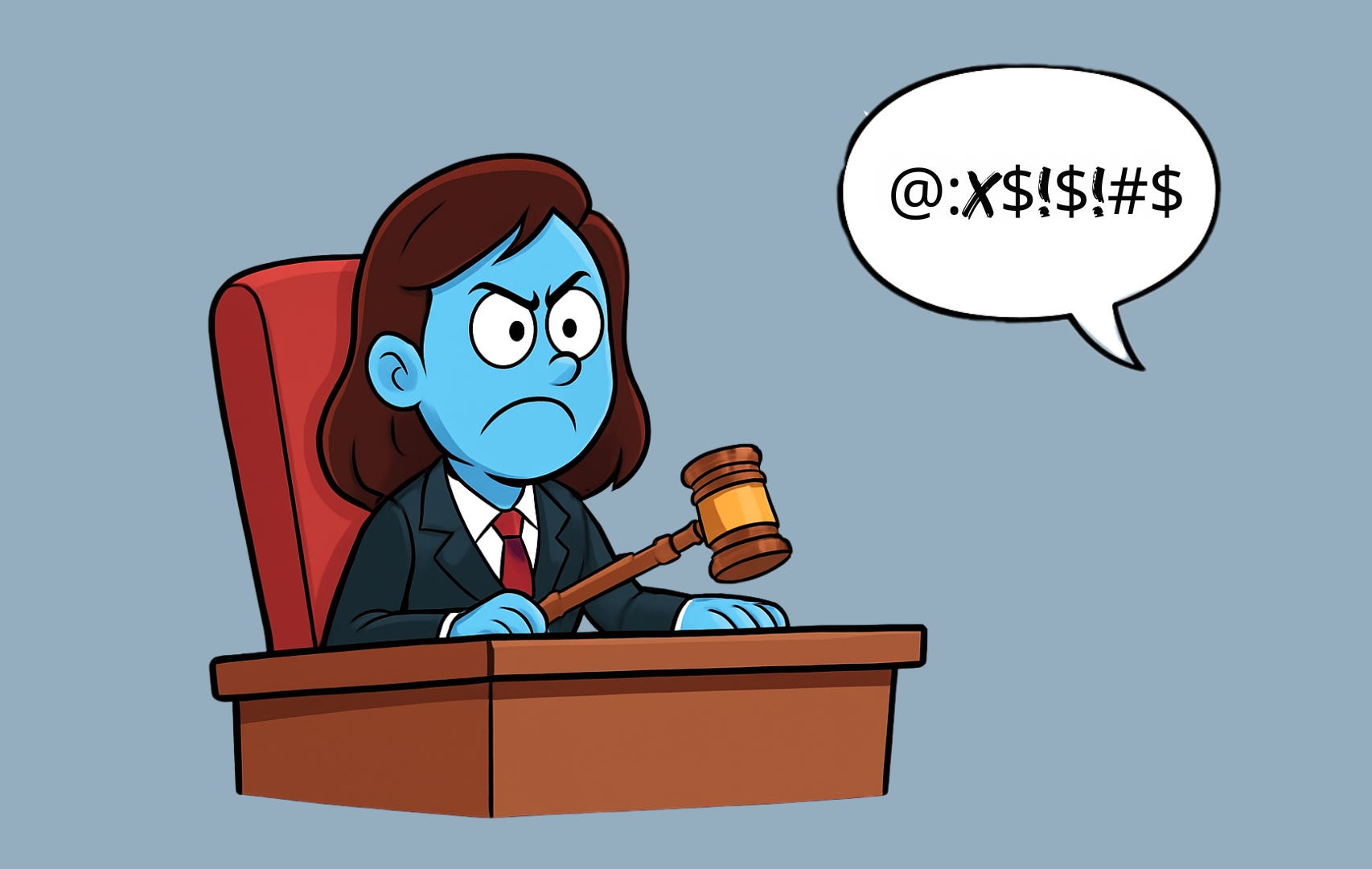
Dear Madam Chair,
In a debate I chaired recently, a participant used a highly charged word to describe the group of people implicated in the resolution. I froze. What is a Debate Chair supposed to do in this moment? We talk about maintaining neutrality in this role, but this situation was extremely uncomfortable. I am also worried that not intervening may make me complicit in the problem.
Does neutrality really require tolerating derogatory remarks?
-Ambivalent Amy
Dear Ambivalent,
Madam Chair appreciates this thoughtful question. You are right to be somewhat concerned—this is one of the most difficult situations a Debate Chair can face. That said, in the Braver Angels Way, we say “neither side is teaching the other or giving feedback on how to think or say things differently.” As such, it is never the Debate Chair’s role to police language.
Why not? Because Debate Chairs are never the arbiters of fact or morality. They are not there to adjudicate truth or declare certain viewpoints more morally correct than others. Their role is to preserve the conditions under which all participants may speak, question, and challenge one another.
In situations like the one you describe it can be tempting to wield your gavel and step in. Much as you might feel compelled to intervene when you hear potentially offensive language, the responsibility for challenging speech belongs to participants. Allowing participants the chance to engage the language they find inappropriate or harmful maintains the Chairs neutrality and helps make courageous citizenship an honored norm.
Consider what this looks like in practice. Suppose a participant refers to ICE agents as “thugs.” Another participant may raise a hand and question, “Could the speaker explain why she uses the word ‘thug’ to describe ICE agents? The speaker can then clarify, add additional context to their perspective, or perhaps choose a different word. If others in the room do not approve of terms used, you can trust that other speakers will offer alternate descriptions of ICE’s actions or present counterarguments.
There are many examples just like this one, on both sides of the political aisle. As liberals call ICE Agents ‘thugs,’ conservatives might call women who have abortions ‘murderers.’ Ever heard a liberal called a snowflake or a communist? A conservative, a fascist or zealot? The same principle applies every time. Madam Chair does not intervene. Participants are welcome to ask clarifying questions, challenge a word, or give a speech that articulates why a remark may be demeaning.
Of course, chairs can and should intervene if someone levels an attack at another participant in the room. If a speaker directly attacks or insults another participant personally or refuses to follow the debate norms, the Debate Chair is obligated to intervene in order to maintain neutrality. This is not about adjudicating right or wrong, but maintaining a level, fair playing field in which all can fearlessly speak freely and fully.
Courageous citizens accept that even when words unsettle us, the best way to engage ideas we disagree with is through dialogue, not suppression.
If someone uses a charged term in their speech, as Chair you should allow the remark to stand. Trust the room. Braver Angels Debates are about better understanding those we disagree with, even when we maintain vehement disagreement. As Chair, you must maintain an atmosphere where this is possible.
Plus, Madam Chair has never known anyone who changed their mind because their speech was suppressed. So, rule of thumb? When in doubt, lean into the dialogue.
-Madam Chair
Thank you for clarification on this question. I found it instructive and very helpful. "Adulting" can be very challenging at times!
Great explanation! I don't think I've ever seen such an incident where it wasn't pointed out by a subsequent speaker.